

Entrypoints
An Entrypoint is a unique combination of HTTP Method (for example GET or POST), URL and Parameters that Bright sends attack payloads to. A different combination of these, for example a different method, results in a different Entrypoint. Entrypoints are the assets that Bright uses for scanning and for reporting vulnerabilities. You add Entrypoints by running a Discovery or by manually adding a single Entrypoint.
Parameters are the values that the request carries, such as URL query values or fields in the request body. A scan tests an Entrypoint by changing these values and sending the modified request. The parameters are the places where Bright attacks the request. You can choose which parts of a request Bright tests in the scan settings. See Target parameter locations.
Because of this, two requests with the same Method and URL but different parameters are different Entrypoints. They have different things to test.
Bright treats two Entrypoints as duplicates only if the method, the URL, the number of parameters and all parameter names are identical. Bright does not create duplicates.
Duplicate Entrypoints
If a discovery finds a known Entrypoint with different parameters, Bright does not update the existing Entrypoint. It creates a new Entrypoint with the new parameters and the status New. The existing Entrypoint keeps its parameters and its status.
As a result, one URL can have two Entrypoints. For example, the first discovery finds POST /api/search with three parameters. A later discovery finds the same request with four parameters. You then see both Entrypoints in the project.
Two Entrypoints with the same method, URL and number of parameters are still different if the parameter names differ.
The Entrypoint Editor
Bright provides a user-friendly feature that simplifies the editing of Entrypoints and theirs Baseline values. This functionality replaces parsed values with placeholders, making it quick and convenient to modify them.
This approach offers the following benefits:
- Comprehensive visibility of the current baseline values and any connectivity issues for each Entrypoint.
- The ability to edit and test Baseline values before initiating scans, ensuring accuracy and efficiency.
- Preservation of optimal baseline values between scans, allowing for consistent and reliable results.
Users have the flexibility to edit these values themselves through the Parameter view. Auto-matched values are labeled as Auto-filled, prompting users to consider modifying the suggested values if needed. When an Entrypoint as created manually, all baseline values are automatically categorized as manually added without additional highlighting.

Editing an existing Entrypoint
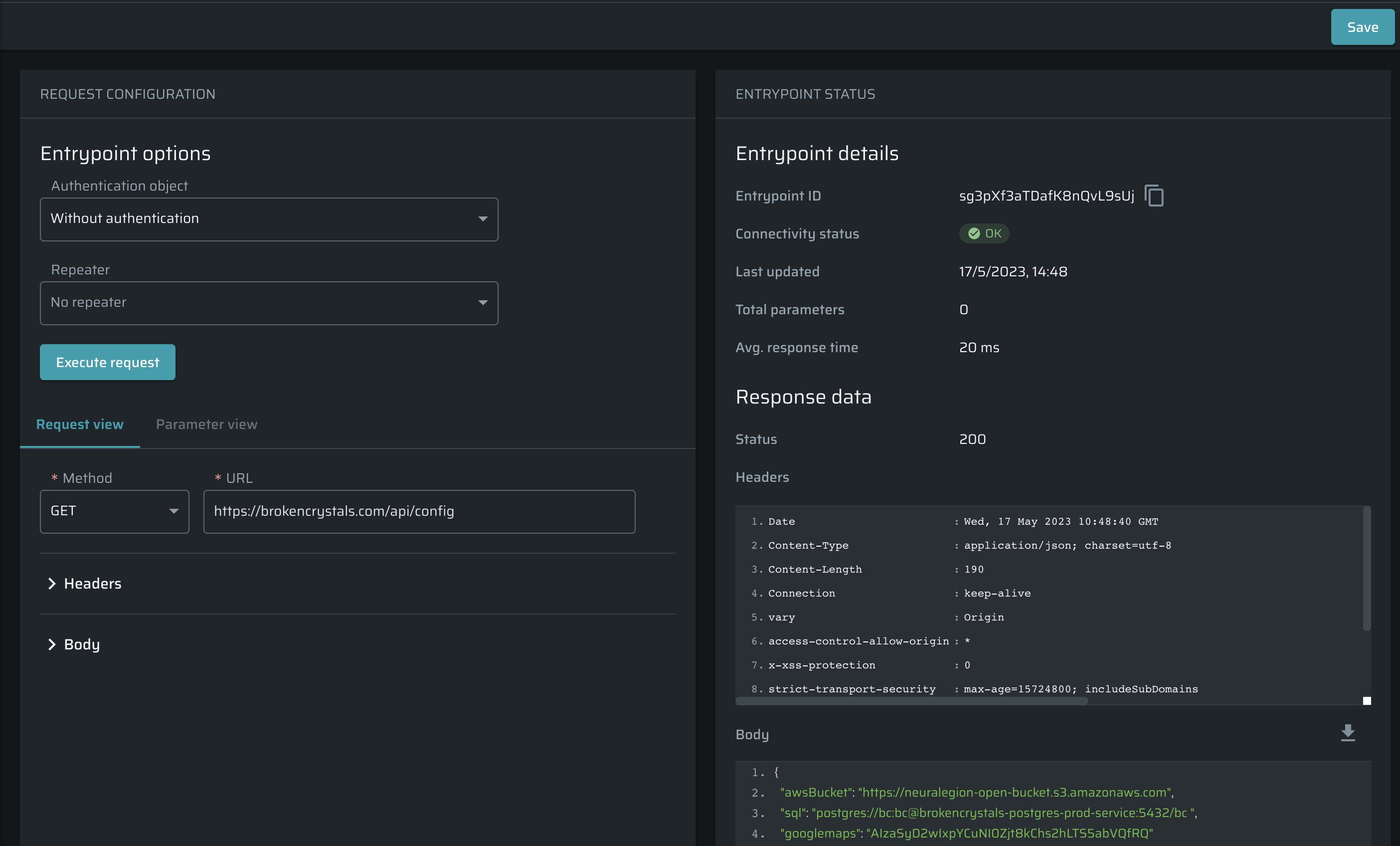
To edit an existing Entrypoint, do the following:
- Open Projects → Entrypoints →
 → Edit entrypoint.
- Change the data in the Request configuration tab.
- Click Execute request to test the Entrypoint.
- Click Save to finish editing.
Re-discovery can override the parameters changes made before.
Fixing an Entrypoint
Using the Entrypoint editor, it's possible to fix the connectivity status of the Entrypoint.
Use the Request view tab to change the baseline values. Once a request is executed, baseline values are extracted and then replaced with placeholders in the raw request. The Parameters view tab allows users to manage values without changing the configuration of the request.
Click Execute request to test the Entrypoint. Results will appear in the Entrypoint status section.
Once the connectivity status is OK, click Save to apply changes.

Updated 8 days ago