

Bright Authentication Recorder
Bright’s authentication recorder is a simple utility that assists practitioners in setting the authentication object for the scanning flow. The idea is to start a recording session in the background. The user performs a regular login flow, and Bright captures all actions in the background to be re-played later during the scan automation. Below are the details of how to perform this activity.
To record your login session, follow these steps:
-
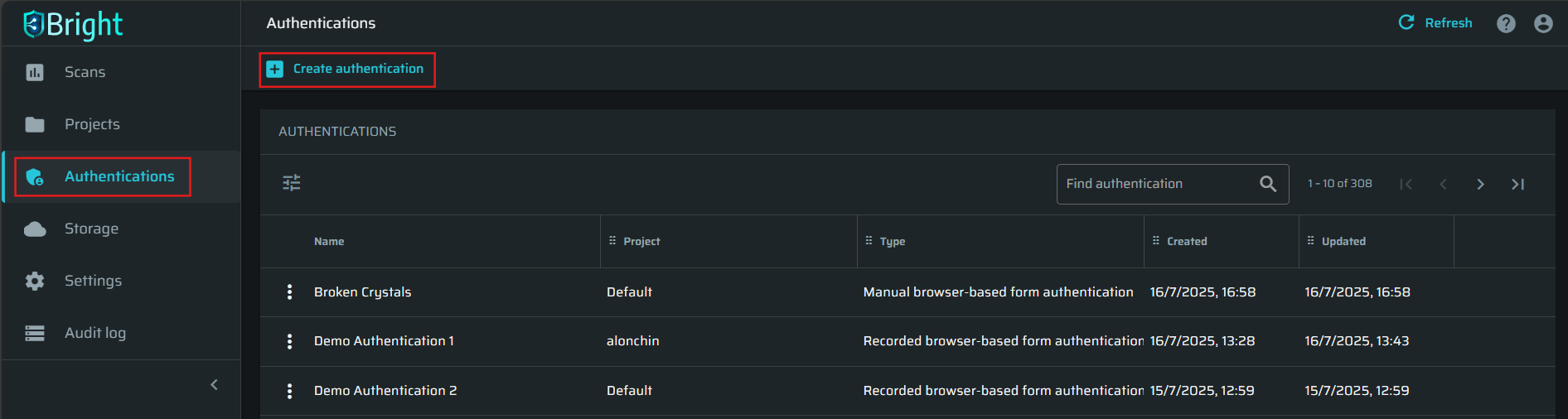
Open the Authentications tab on the left menu and click +Create authentication:
-
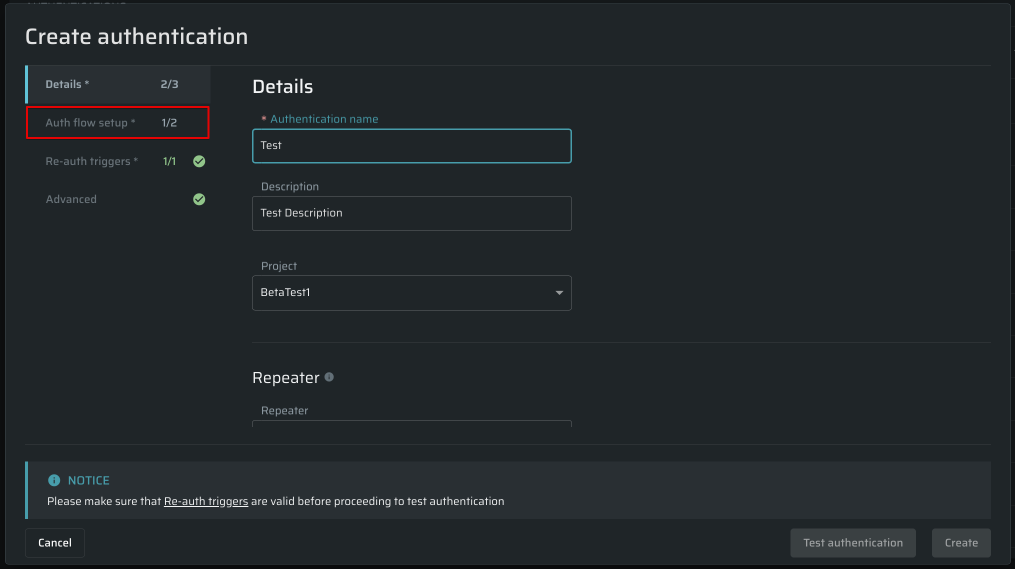
Specify the required details: enter your Authentication name (this name aims to provide context when selected later while defining a discovery or a scan). Select a Project from the available projects and a Reapeater, if needed:
-
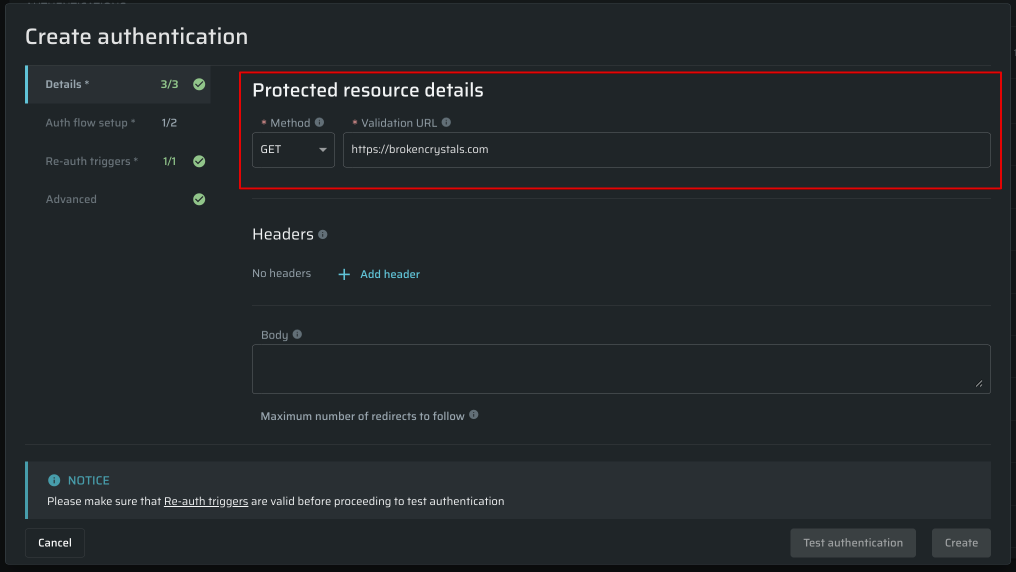
Enter the target's address in the Protected resource details section to proceed:
-
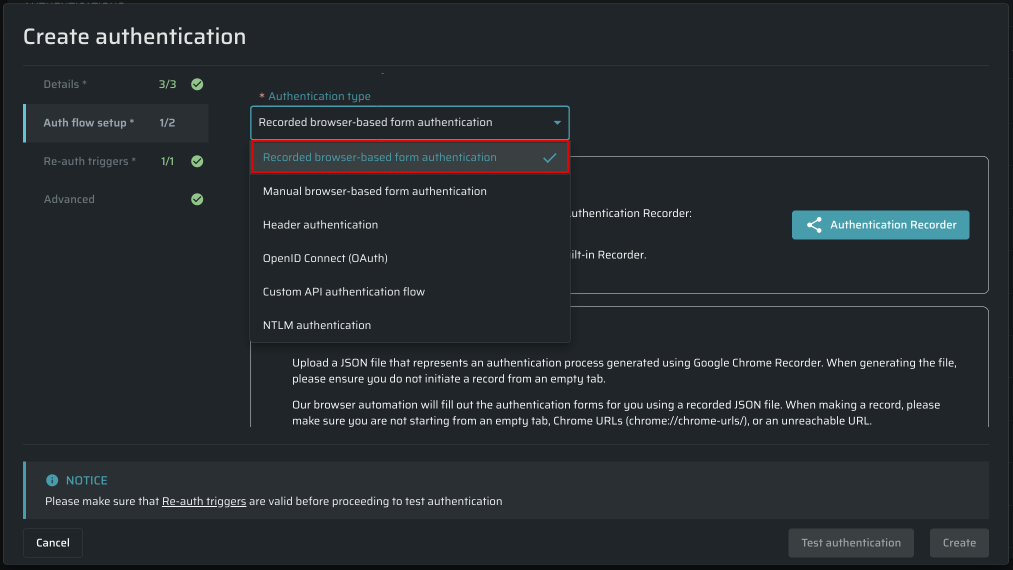
Select the next tab in the flow called Auth flow setup. In the Authentication type field, select the Recorded browser-based form authentication:
-
Select the Record with Bright option and click the Authentication Recorder button:
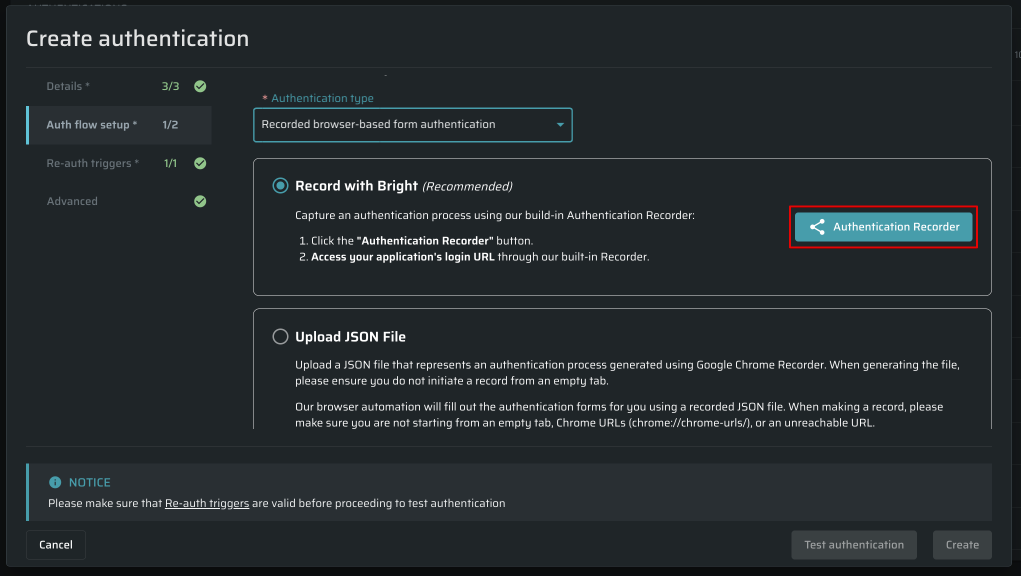 Note
When you first run Authentication Recorder, your browser may request permission to access your clipboard. Grant the permission to proceed.
-
After the Authentication Recorder is started, you'll see a browser window:
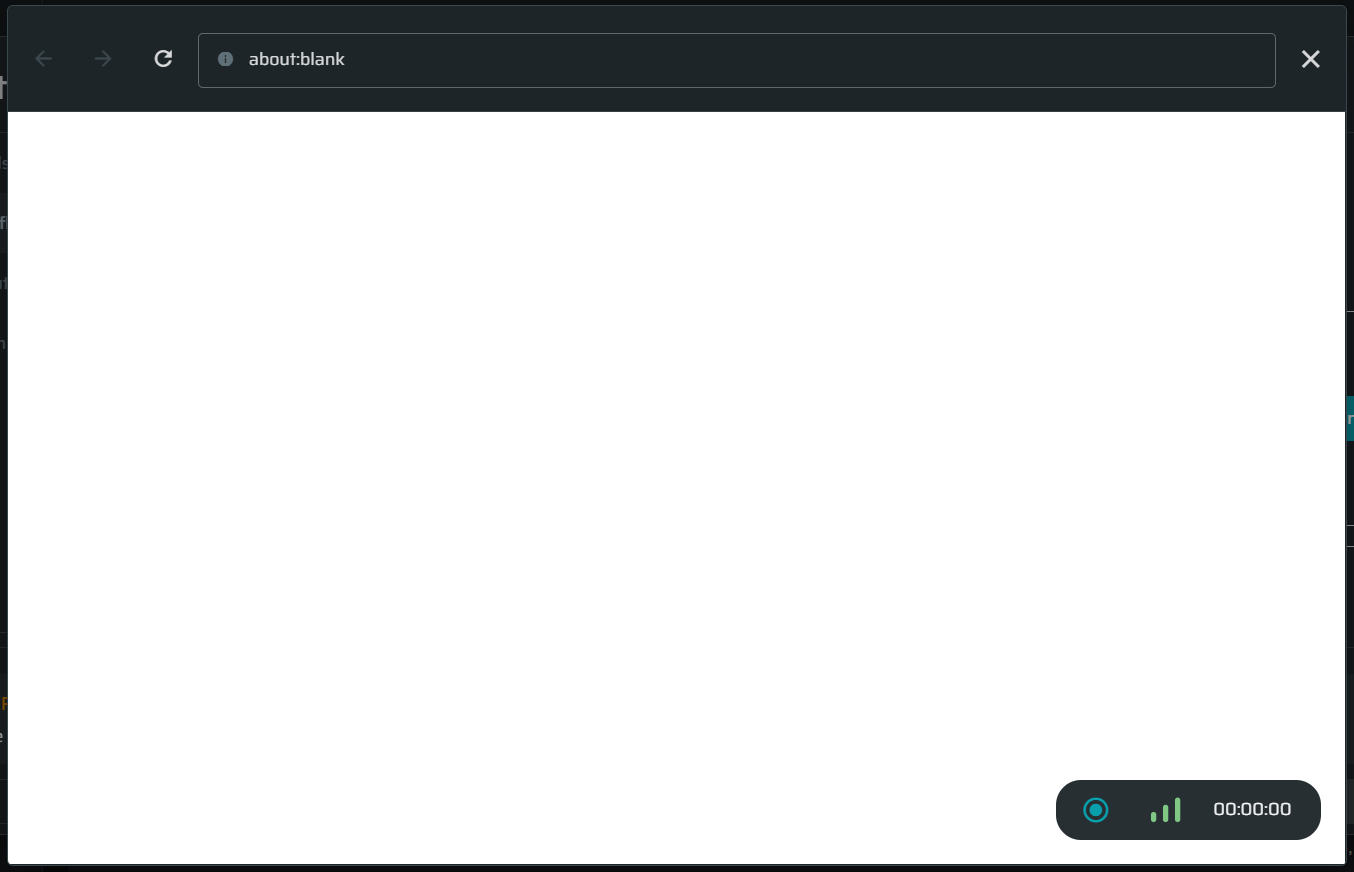
The navigation is simple as in any other browser: use the address bar to access web pages, the arrows to go forward and backward, and the reload button to refresh the page.
The recording does NOT start automatically when the browser window appears. -
Click the Recording button to start the recording. Perform the required login steps of the authentication process.
-
After finishing the authentication process, click the Save button to stop and save the recording.
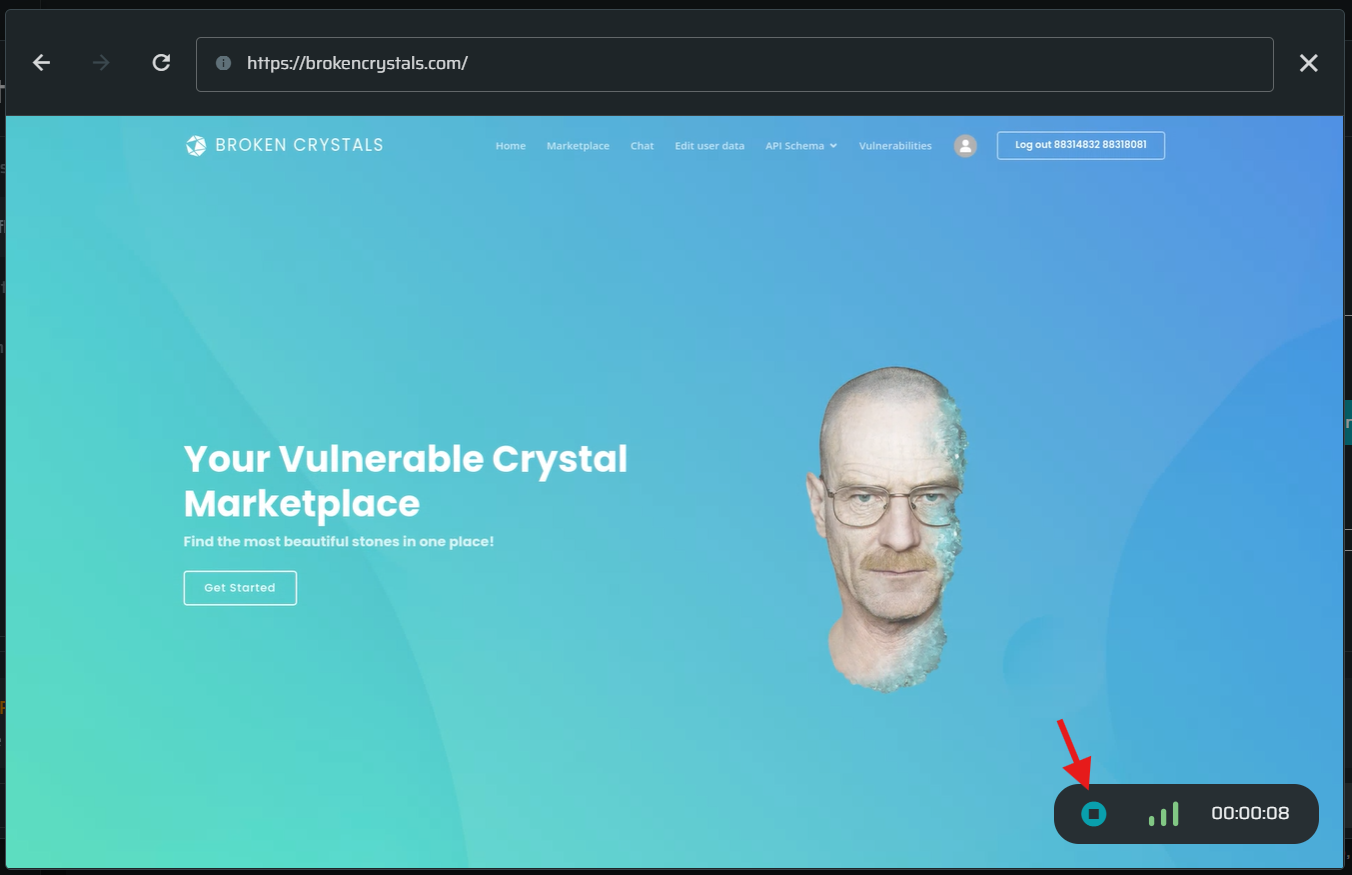
-
Once the saving is done, close the recorder window the recording will be attached to the authentication:
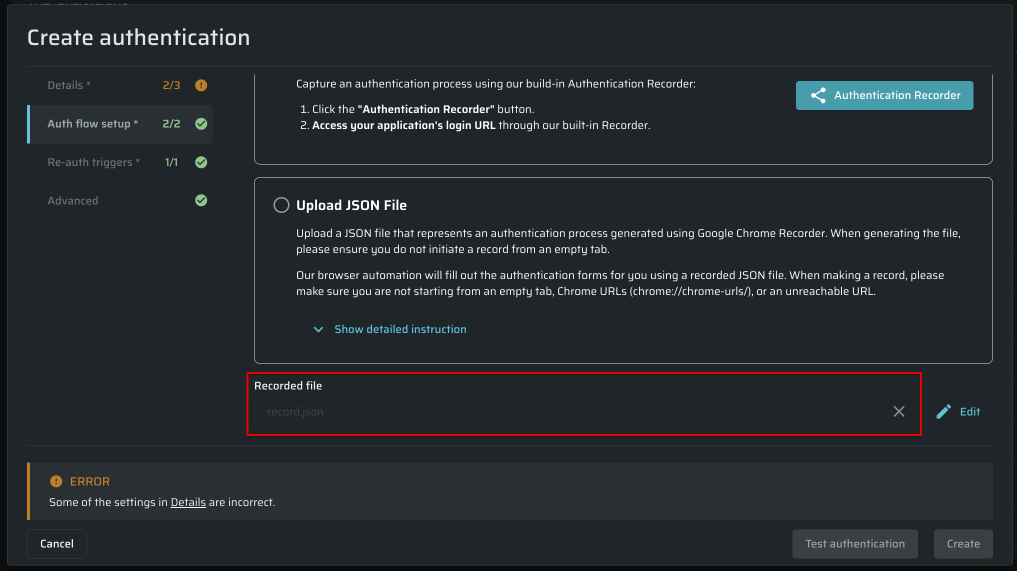
To learn about how to edit or delete the recorded session, see the article.
Troubleshooting
ERR_BLOCKED_BY_CLIENT Error
While you record a Recorded Browser-Based Authentication Object (RBBAO), the recorder window may fail to load the target. It then shows Chrome's standard ERR_BLOCKED_BY_CLIENT page.
Cause
One reason is DNS rebinding protection. The recorder blocks the request when the DNS resolution of the target hostname is inconsistent, that is, when the IP address changes between checks.
This is common for targets behind shared CDN or subnet infrastructure. For example, several customers can resolve through the same Azure Front Door subnet (*.tm-azurefd.net). Any target that shares IP ranges with other tenants on Azure or another provider can be affected.
DNS rebinding protection does not apply when the authentication object uses a Repeater. The recorder loads the target without this check.
The error page is built into Chrome and cannot be customized. Bright shows no more specific message when DNS rebinding protection is the cause.
How to confirm
Look up the target hostname several times, for example with nslookup. If different lookups return different IP addresses for the same host, DNS rebinding protection is the likely cause. Some CDNs return several addresses on purpose, so treat this as a hint.
How to fix it
Use one of these options:
- Ask the owner of the target's DNS to make the hostname resolve the same way every time.
- Select a Repeater in the authentication object and record again. The recorder does not apply DNS rebinding protection when a Repeater is used.
- Use Manual browser-based form authentication, which does not need a recording.
If DNS is consistent and you still see the error, contact Bright Support. Include the target URL and the time of the attempt.
Updated 7 days ago